SRT’s 3-Airport High-Speed Rail Deadline: Implications for Thailand’s Infrastructure and Investment Climate
Source: The Thaiger
Strategic Infrastructure at a Crossroads
The State Railway of Thailand (SRT) has drawn a clear line in the sand: by July 2026, contract amendments for the 3-Airport High-Speed Rail link must be finalized or the SRT will reclaim control over a critical section of the project. This ultimatum is more than a bureaucratic milestone—it signals a decisive moment for Thailand’s infrastructure ambitions and the broader investment landscape.
Project Overview: Linking Thailand’s Economic Hubs
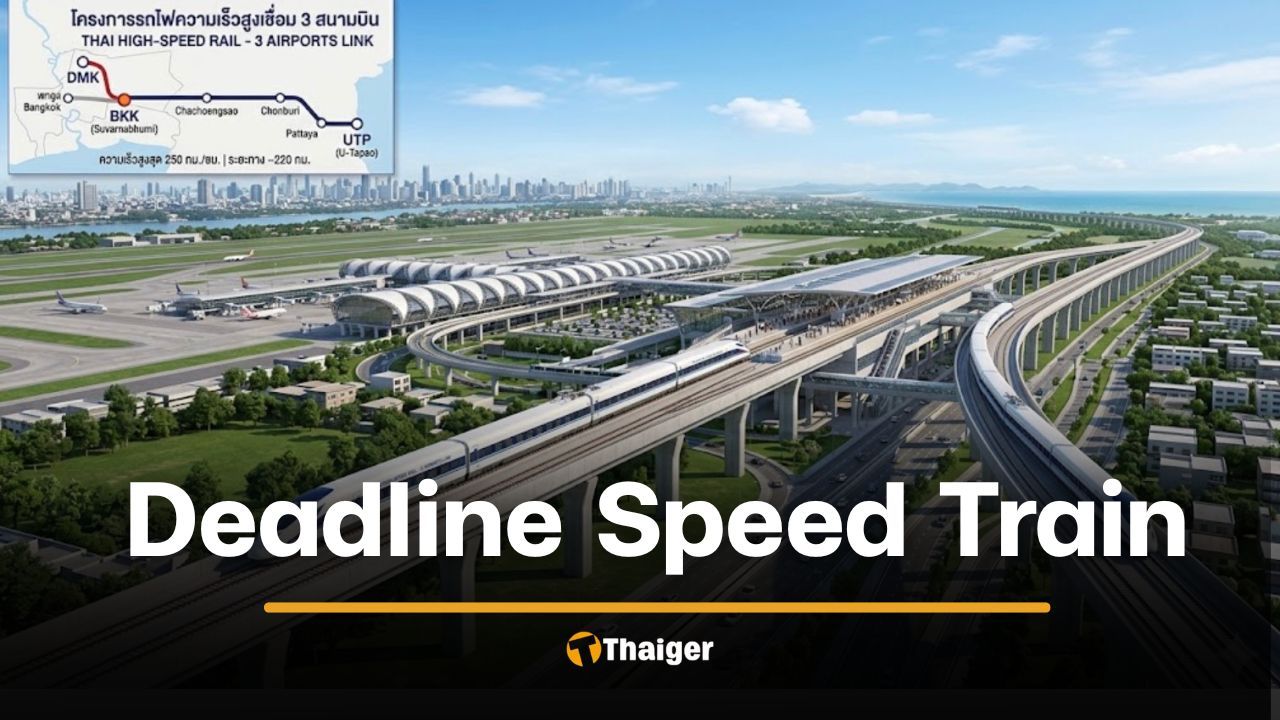
The 3-Airport High-Speed Rail project aims to connect Don Mueang, Suvarnabhumi, and U-Tapao airports, integrating the Eastern Economic Corridor (EEC) with Bangkok and beyond. A key segment, the 15.21-kilometer Bang Sue-Don Mueang section, is shared with the Thai-Chinese High-Speed Rail (Bangkok-Nakhon Ratchasima). Asia Era One Co., Ltd. (CP Group) holds the concession for the 3-airport link, responsible for designing and constructing this shared section, valued at 3.9 billion baht.
Deadline Dynamics: What’s at Stake?
The SRT’s July 2026 deadline for contract amendments is not just about project management—it’s about risk, control, and the pace of national development. If the Cabinet approves the changes in time, construction could begin by August 2026, with completion projected for 2032. However, if delays persist, the SRT intends to reclaim the civil works, reducing the 3-Airport project’s civil budget by around 10 billion baht and taking direct responsibility for the Bang Sue-Don Mueang section.
- For investors: The outcome will affect timelines, cost structures, and risk profiles for all stakeholders, including those with interests in real estate, logistics, and tourism along the high-speed rail corridor.
- For expats and travelers: The project promises to transform mobility, reducing travel times between key economic zones and airports, and enhancing Thailand’s appeal as a regional hub.
Analysis: Opportunities and Uncertainties
The SRT’s assertive stance reflects growing impatience with bureaucratic inertia and a desire to maintain momentum on flagship infrastructure projects. For investors, this signals a government willing to intervene decisively to protect national interests and project viability. However, it also highlights the complexities of public-private partnerships (PPPs) in Thailand, where overlapping responsibilities and changing political priorities can introduce unpredictability.
Key considerations for stakeholders include:
- Regulatory Environment: The Cabinet’s decision-making process will set a precedent for future PPPs. Delays or reversals could dampen investor confidence, while a smooth resolution would reinforce Thailand’s reputation as a reliable destination for infrastructure investment.
- Project Integration: The shared infrastructure between the Thai-Chinese and 3-Airport lines underscores the need for coordination. Any misalignment could lead to costly delays or technical complications, affecting downstream projects and regional connectivity.
- Economic Impact: Timely completion of the high-speed rail link is crucial for the EEC’s success, supporting industrial growth, tourism, and urban development. Delays could slow the pace of economic transformation and diminish Thailand’s competitiveness in Southeast Asia.
Looking Ahead: Strategic Implications
For expats, investors, and businesses, the next 24 months will be critical. Monitoring the Cabinet’s actions and the SRT’s follow-through will offer valuable insights into Thailand’s infrastructure governance and the reliability of large-scale PPPs. The outcome will shape not only the future of high-speed rail but also the broader trajectory of Thailand’s economic modernization.
In summary, the SRT’s July 2026 deadline is a pivotal test for Thailand’s infrastructure ambitions. Whether it leads to accelerated progress or further complications, the decision will reverberate across the investment landscape, influencing confidence, opportunity, and the pace of change in one of Southeast Asia’s most dynamic economies.
Source: The Thaiger
This article is provided for informational purposes only and does not constitute financial or legal advice. Information sourced from The Thaiger may have been edited for clarity. Always verify details with official sources before making any decisions.
Related Articles

Da Nang: Vietnam’s Rising Digital Nomad Hub and What It Means for Expats and Investors
Da Nang is rapidly positioning itself as a premier destination for digital nomads, challenging Southeast Asia’s established hotspots. This article analyzes the city’s appeal, the implications for expats, and the opportunities and challenges for investors.