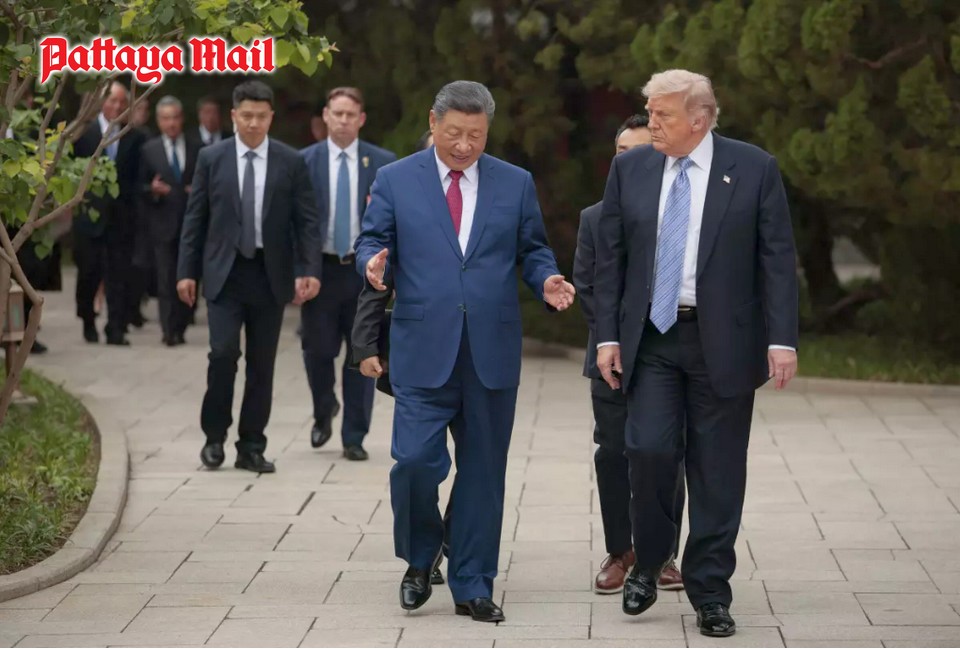
Bamboo or Pine? Lessons from the Sino-US Summit for International Investors in Thailand
Source: Pattaya Mail
Beyond the Headlines: A Philosophical Divide at the Heart of Global Commerce
The recent summit between Chinese President Xi Jinping and US President Donald Trump, held in Beijing from May 13–15, 2026, has been widely reported as another round in the ongoing contest over tariffs, trade deficits, and manufacturing quotas. However, for international investors and expats in Thailand, the real significance of the summit lies not in the headline deals, but in the philosophical undercurrents that shaped the negotiations—and what these mean for business strategy in an increasingly volatile world.
The Pine and the Bamboo: Competing Models for Corporate Strategy
During a private walk in the historic gardens of Zhongnanhai, President Xi used a pointed metaphor: contrasting the rigid pine with the flexible bamboo. The message was clear: in times of geopolitical uncertainty, resilience comes not from inflexibility, but from adaptability rooted in strong foundations. This stands in stark contrast to President Trump’s transactional approach, which prioritized immediate, quantifiable outcomes over long-term structural alignment.
For investors and business leaders in Thailand, these metaphors are more than diplomatic flourishes—they offer a framework for evaluating risk and opportunity in a region shaped by shifting global power dynamics.
Implications for International Law and Compliance in Thailand
Many international enterprises, especially those new to Southeast Asia, have historically operated with a ‘pine tree’ mentality—rigid, centralized, and slow to adapt to local regulatory changes. This approach is increasingly risky:
- Regulatory Shifts: Thailand’s adoption of the Personal Data Protection Act (PDPA) and alignment with global data standards is just one example of how local compliance requirements can shift rapidly.
- Geopolitical Tensions: The re-imposition of US export controls or sudden changes in Chinese trade policy can disrupt established supply chains overnight.
- Legal Vulnerabilities: Firms that fail to build robust, multi-jurisdictional legal frameworks risk costly disputes, penalties, or even market exclusion.
In contrast, the ‘bamboo’ model advocated by President Xi—and echoed by legal experts in the region—emphasizes flexibility built on a strong compliance root system. This means:
- Investing in cross-border tax and regulatory expertise
- Implementing anti-money laundering (AML) protocols that meet both local and international standards
- Drafting sophisticated arbitration clauses to manage disputes across jurisdictions
- Regularly updating internal policies to reflect evolving legal and political realities
Strategic Takeaways for Expats and Investors in Thailand
For those managing assets, businesses, or careers in Thailand, the lessons from the summit are clear:
- Prioritize Compliance: Treat legal and regulatory compliance not as a cost center, but as the foundation of long-term resilience.
- Build Flexibility into Operations: Design supply chains, data management, and governance structures that can pivot quickly in response to external shocks.
- Engage Local Expertise: Partner with advisors who understand both the letter and the spirit of Thai and regional law, as well as the broader geopolitical context.
- Monitor Geopolitical Developments: Stay informed about major diplomatic shifts, as these can have immediate and far-reaching consequences for market access and regulatory risk.
Conclusion: The Bamboo Advantage in a Volatile Century
The Xi-Trump summit’s blend of philosophical symbolism and hard-nosed negotiation offers a timely reminder: enduring success in Southeast Asia will go to those who combine robust legal roots with the operational flexibility of bamboo. For expats and investors in Thailand, now is the time to reassess strategies, strengthen compliance frameworks, and cultivate the adaptive mindset needed to thrive amid global uncertainty.
Source: Pattaya Mail
This article is provided for informational purposes only and does not constitute financial or legal advice. Information sourced from Pattaya Mail may have been edited for clarity. Always verify details with official sources before making any decisions.
Related Articles

How Law Enforcement Success in Eastern Visayas Shapes Investment Prospects
Recent police operations in Eastern Visayas have led to the arrest of 61 wanted individuals, signaling a stronger rule of law and improved safety. This development holds significant implications for expats and investors considering opportunities in the region.

