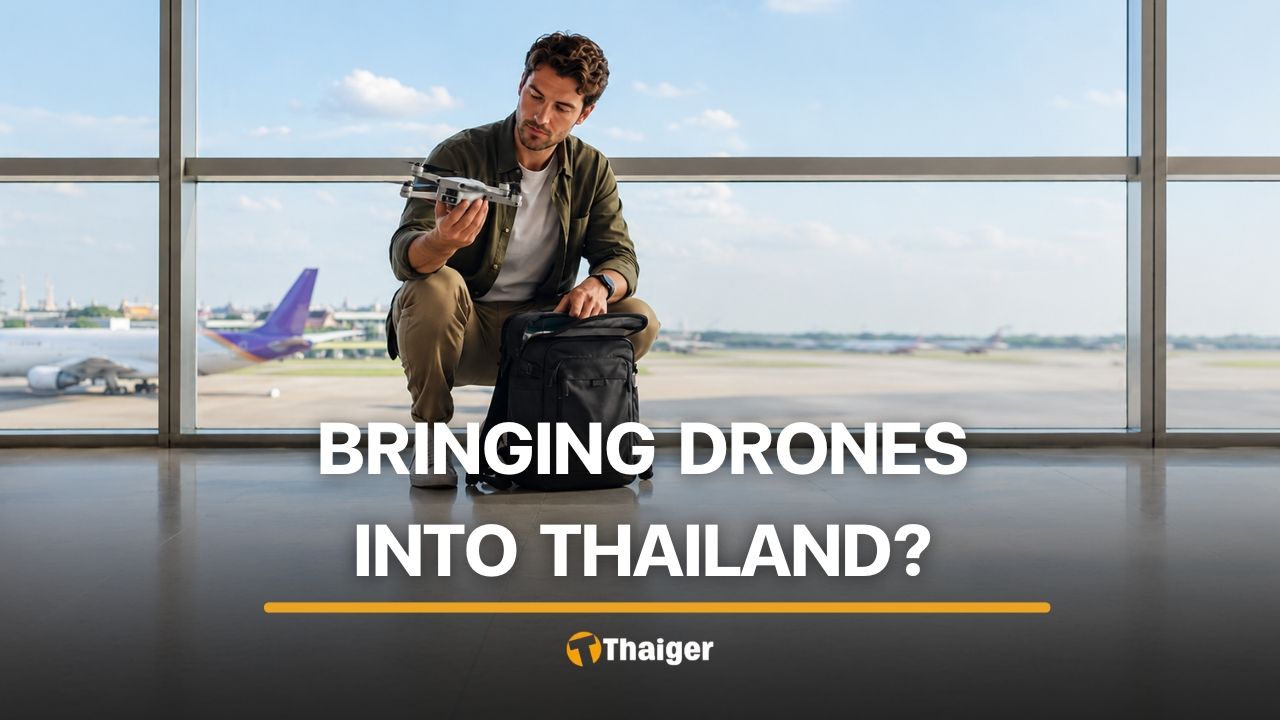
Bringing Drones to Thailand in 2026: What Expats and Investors Need to Know
Source: The Thaiger
Thailand’s Drone Entry Rules: A 2026 Overview
As drones become increasingly popular among travelers, content creators, and real estate professionals, many expats and investors are asking: Can you bring a drone into Thailand in 2026? The answer is yes, but the regulatory landscape is nuanced. Understanding the distinction between importing a drone and flying one legally is crucial for anyone considering bringing this technology into the country.
Customs: Entry Is Easy, But Not the Whole Story
Thailand’s customs procedures for personal drones remain straightforward. Travelers can bring a single drone through the Green Channel at major airports without special paperwork or import permits, provided it is for personal use and within the 20,000 baht personal-effects allowance. Customs officials treat drones like other personal electronics—attention is only drawn by multiple units, sealed retail boxes, or conspicuous branding.
It’s important to note that customs checks are entirely separate from drone registration requirements. You won’t be asked for Civil Aviation Authority of Thailand (CAAT) or National Broadcasting and Telecommunications Commission (NBTC) paperwork at the border.
Airline Battery Regulations
Drone batteries are subject to airline—not customs—rules. All lithium batteries must be carried in hand luggage. Most consumer drone batteries (under 100 Wh) are permitted without special approval, but larger batteries face stricter limits or outright bans. Expats and investors should check airline policies before flying.
Importing by Courier: A Cautionary Tale
While bringing a drone in your luggage is simple, shipping one to Thailand is far more complex. Since mid-2024, all shipments are subject to 7% VAT, and as of January 2026, the previous 1,500 baht duty exemption no longer applies—import duty and VAT are charged from the first baht. The NBTC may also become involved, as drones are classified as radio equipment. Delays, paperwork issues, and additional courier fees are common. Even major drone manufacturers have ceased direct shipments to Thailand, highlighting the risks.
- Recommendation: Avoid ordering drones from overseas retailers for delivery to Thailand. The process is costly and unpredictable.
Buy Local or Bring Your Own?
For expats and investors, purchasing a drone locally is often the most practical option. Major DJI models are widely available at authorized dealers in Bangkok and other cities, with prices comparable to or better than US retail. Local purchase also streamlines the registration process, as Thai distributors can assist with the necessary paperwork.
- Buying locally means easier registration and after-sales support.
- Check current Thai prices before deciding to bring a drone from abroad.
Registration and Legal Flying: The Real Challenge
Once in Thailand, flying a drone legally is a separate process governed by CAAT and NBTC. Registration requires:
- CAAT and NBTC registration (NBTC requires a Thai SIM and entry stamp, so it can only be completed after arrival)
- Passing an online knowledge test
- Third-party liability insurance with at least 1,000,000 baht coverage
Thailand has tightened drone laws in recent years, with strict no-fly zones in central Bangkok, Chiang Mai, Phuket, national parks, and border provinces. Violating these rules can result in hefty fines or confiscation.
Strategic Insights for Expats and Investors
For expats using drones for real estate, tourism, or creative projects, compliance is non-negotiable. The regulatory environment is designed to balance innovation with public safety and privacy. Investors in drone-related businesses should note the robust enforcement and the need for local partnerships to navigate registration and operational hurdles.
- Tip: Always research the latest CAAT and NBTC requirements before arrival, and consider local legal or distributor assistance for smooth compliance.
Conclusion
Bringing a drone into Thailand in 2026 is straightforward at customs, but legal operation requires careful attention to registration and flight restrictions. For most expats and investors, buying locally and leveraging local expertise is the safest and most efficient path. As drone usage grows, staying informed and compliant is essential for maximizing opportunities and avoiding legal pitfalls in Thailand’s dynamic market.
Source: The Thaiger
This article is provided for informational purposes only and does not constitute financial or legal advice. Information sourced from The Thaiger may have been edited for clarity. Always verify details with official sources before making any decisions.